
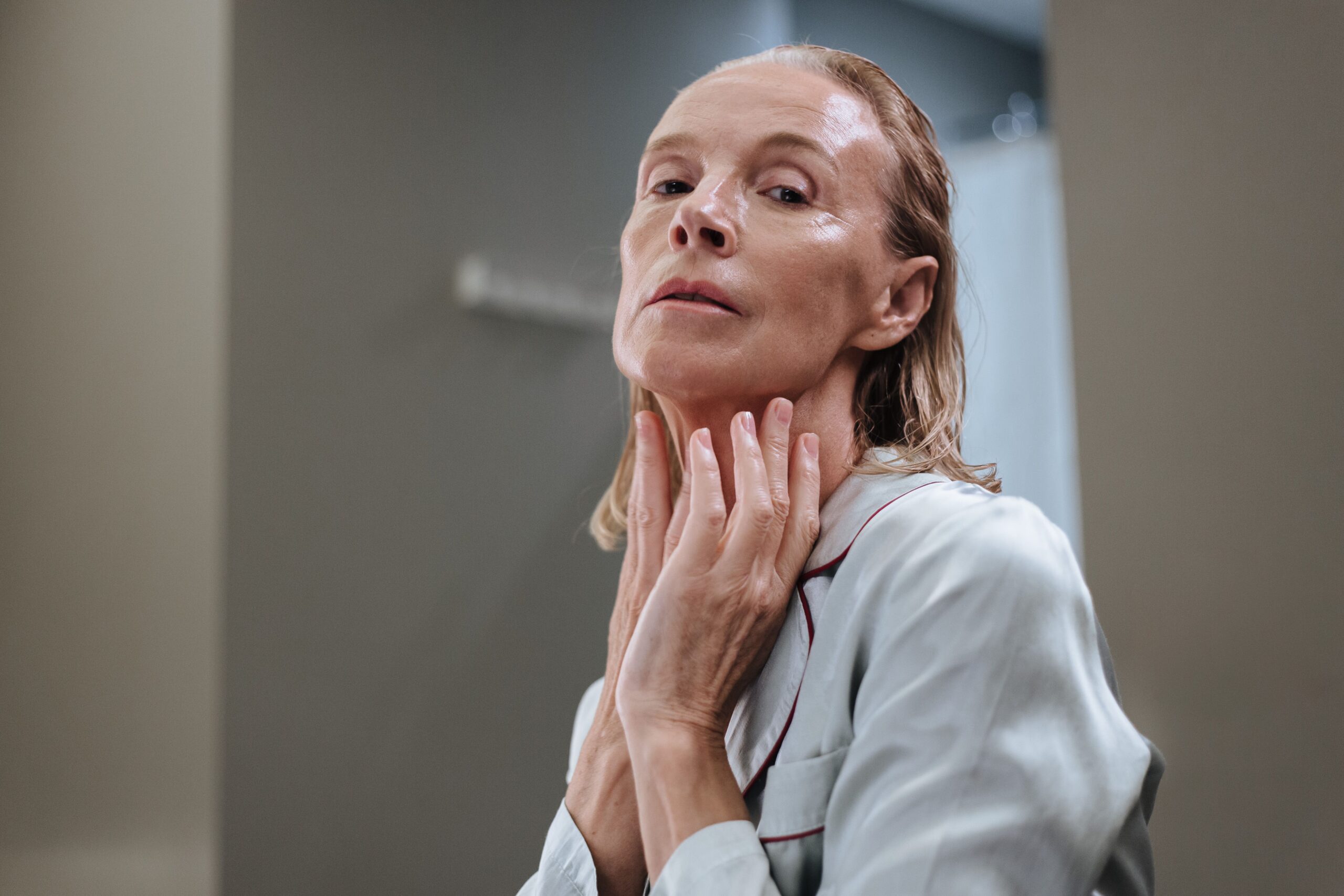
Skin care usually begins at the bathroom mirror. We talk about cleansers, retinoids, moisturizers, injectables, peels, and sunscreen.
Those tools can be useful, but they are only one part of the picture. Skin is not a decorative covering placed over the body; it is a living organ with its own immune, sensory, vascular, endocrine, and barrier functions.
That distinction matters as we age. The skin is constantly responding to blood flow, glucose regulation, inflammation, sleep, nutrition, stress physiology, sun exposure, medications, and changing reproductive hormones. A topical product can influence the surface. It cannot, by itself, correct an untreated thyroid disorder, replace lost sleep, improve insulin resistance, or resolve a disruptive menopause transition.
The most useful anti-aging question is not “Which product should I buy next?” but “What conditions does my skin need in order to repair, protect, and function well?” That is the question lifestyle medicine helps answer.
Skin is an organ, not a surface
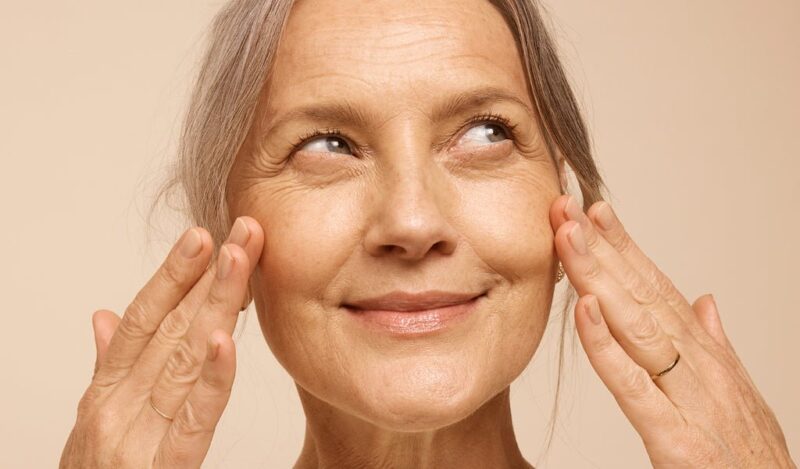
The skin performs several jobs at once. Its outer barrier limits water loss and helps keep irritants and microbes out. Its blood vessels help regulate temperature. Its nerve endings detect touch, pressure, pain, and heat.
Its immune cells participate in defense and inflammation, while deeper connective tissue provides strength and elasticity.
Like every other organ, skin depends on oxygen and nutrients delivered through the circulation. It also depends on the raw materials required to build proteins, lipids, and signaling molecules. When the body is persistently under-recovered, poorly nourished, inflamed, or exposed to excessive ultraviolet radiation, the effects may eventually become visible as dryness, slower wound healing, uneven tone, reduced elasticity, or increased fragility.
That does not mean every skin change is a diagnostic clue. Skin is not a crystal ball, and a wrinkle is not proof of a particular disease. It does mean that persistent or sudden changes deserve more than a cosmetic explanation, especially when they appear alongside fatigue, sleep disruption, hair changes, weight changes, menstrual changes, itching, bruising, or slow healing.
Why midlife hormone changes show up on the skin
Hormonal transitions are one reason skin can feel different in perimenopause and menopause. Estrogen receptors are present in skin tissue, and estrogen influences processes connected with collagen, hydration, barrier function, wound repair, and blood vessels. As estrogen levels change and ultimately fall after menopause, some women notice thinner or drier skin, increased laxity, altered texture, acne, facial hair growth, or changes in scalp hair.
The National Institute on Aging describes a broader pattern of aging skin: the outer layer becomes thinner and less elastic, collagen and elastin decline, and blood vessels become more fragile. It also identifies hormonal changes associated with menopause as one contributor to thinner, drier skin in addition to age, sun exposure, smoking, environmental dryness, and chronic health conditions.
Read the National Institute on Aging guidance on skin care and aging for the wider clinical context.
The timeline is not identical for everyone. Some people have relatively mild skin symptoms; others experience dryness, flushing, acne, or hair changes that affect comfort and self-confidence.
Menopause itself is a normal life stage, not a disease, but symptoms that interfere with sleep, work, relationships, or daily functioning deserve attention.
There is also a reason to be cautious about treating hormone biology as a beauty shortcut. Research into topical estrogens for facial aging is still heterogeneous, with small studies, different formulations, and limited follow-up.
A recent dermatology review cautioned that confident conclusions about efficacy cannot yet be drawn and that extra estrogen exposure should not be treated as risk-free. Hormone therapy decisions should be based on a person’s symptoms, medical history, preferences, and contraindications, not on the promise of younger-looking skin alone.

The inside-out pillars that support skin aging
1. Food is structural support, not a beauty trend
Skin constantly replaces cells and repairs damage. That work requires adequate energy, protein, essential fats, vitamins, minerals, and fluid. A restrictive diet may be marketed as a fast route to a smaller waist or clearer skin, but chronic under-eating can work against tissue maintenance and muscle preservation.
A practical pattern is more useful than a list of “superfoods”: vegetables and fruit for fiber and phytonutrients, beans and whole grains for slow-digesting carbohydrates, fish or other protein sources, nuts and seeds, and unsaturated fats.
The National Institute on Aging points to Mediterranean-style eating, with produce, whole grains, healthy fats, and lean proteins, as one pattern associated with healthy aging. That is not a promise that a salad erases wrinkles. It is a way to support the vascular and metabolic systems that skin relies on.
Blood glucose also matters, particularly when meals are dominated by refined carbohydrates and ultra-processed foods. Repeated high glucose exposure can contribute to glycation, a chemical process that can make long-lived proteins such as collagen less flexible.
Glycation is real biology, but fear-based claims about a single food “destroying” your face are not useful. The overall eating pattern, metabolic health, and consistency matter more than perfection.
For external skin care, simple ingredients can also have a place in a broader routine. Coconut oil, for example, is often used to moisturize dry skin, although it should not be presented as a proven skin-whitening treatment.

2. Movement improves more than muscle tone
Exercise does not work like a facial serum, and sweating is not a detox treatment. Its value is deeper: regular movement supports cardiovascular fitness, glucose handling, muscle mass, balance, mood, and sleep. Those changes improve the internal environment in which skin has to function.
Resistance training is especially relevant in midlife because preserving muscle supports strength and independence as we age.
Walking, cycling, swimming, dancing, and other aerobic activities support circulation and cardiorespiratory health, while balance work helps maintain physical confidence.
The right dose is the dose a person can repeat safely. A punishing plan followed for ten days is less useful than a moderate plan that remains part of life.
The National Institute on Aging notes that older adults can benefit from aerobic, muscle-strengthening, and balance activities, and that physical activity can also improve sleep and emotional well-being. Its guidance is a good reminder that exercise is not merely a body-composition project.

3. Sleep is part of skin care
Sleep is when the body shifts away from constant demand and toward repair, immune regulation, memory processing, and metabolic recovery. A single poor night may leave the face looking tired, but the more important concern is persistent sleep disruption.
Repeatedly shortened or fragmented sleep can affect mood, appetite, glucose regulation, blood pressure, and the ability to cope with stress.
Menopause can make this pillar difficult. Hot flashes and night sweats may wake someone repeatedly, while anxiety, pain, urinary symptoms, or an irregular schedule can keep the nervous system alert. Telling a sleep-deprived person to “just get better sleep” is not a treatment plan.
Telling a sleep-deprived person to “just get better sleep” is not a treatment plan. The cause of the disruption needs to be addressed. Skincare can also play a role in an overall routine, but active ingredients need to be introduced thoughtfully. If you are considering combining lactic acid and retinol, our guide, “Can You Use Lactic Acid and Retinol Together?,” explains how to approach the combination while minimizing irritation.
The cause of the disruption needs to be addressed.
Helpful foundations include a fairly consistent wake time, morning outdoor light, regular daytime activity, a cooler and darker bedroom, and a wind-down routine.
If snoring, gasping, persistent insomnia, severe night sweats, or daytime sleepiness are present, medical evaluation is more appropriate than adding another supplement.

4. Stress biology is not a character flaw
Chronic stress can influence skin through several pathways, including sleep loss, inflammatory signaling, changes in scratching or picking behavior, and shifts in conditions such as acne, eczema, psoriasis, or rosacea. It is too simplistic to say that stress “causes” every flare, but it is equally simplistic to ignore stress when symptoms repeatedly worsen during periods of overload.
The answer is not to become perfectly calm. It is to give the nervous system regular opportunities to downshift: a walk after work, slow breathing, strength training, time with friends, therapy, restorative hobbies, or practical changes to an unsustainable schedule. These are not cosmetic rituals. They are ways of reducing the total physiological burden carried by the body.
Do not let “inside out” become an excuse to skip the outside
Internal health and topical care are partners, not competitors. Daily broad-spectrum sunscreen remains one of the most effective ways to reduce cumulative ultraviolet damage, which accelerates collagen breakdown and contributes to uneven pigmentation and skin cancer risk. Gentle cleansing and a moisturizer can protect the barrier, while evidence-based topical treatments may help particular concerns.
As skin becomes drier or thinner, aggressive exfoliation can backfire. More irritation is not proof that a product is working.
A dermatologist can help distinguish ordinary dryness from eczema, medication reactions, precancerous changes, infection, or another condition that needs treatment.
I am skeptical of any plan that treats a long list of expensive powders as the foundation of skin longevity. The American Academy of Dermatology notes that evidence for collagen supplements is limited, and that positive studies may have industry funding. A balanced diet, sun protection, not smoking, moderate alcohol use, sleep, and appropriate medical care have a much stronger claim to being foundational than a fashionable tub of peptides.
Where hormone care fits
Hormone care is not one universal protocol. Some women need help with hot flashes or night sweats; others are more troubled by sleep, vaginal symptoms, mood changes, acne, hair loss, or irregular bleeding. Some will consider hormone therapy, while others will prefer nonhormonal options.
The appropriate decision depends on the person, not on a generic “hormone balance” promise.
The American College of Obstetricians and Gynecologists advises discussing symptoms, personal and family history, benefits, risks, and preferences with a clinician when considering menopause hormone therapy. It also recommends FDA-approved treatments over routinely using compounded “bioidentical” products when approved options exist, because compounded preparations do not have the same evidence and quality oversight.
For women who want care that connects skin concerns with sleep, metabolic health, sexual health, and the menopause transition, comprehensive women’s wellness and hormone care can provide a more useful framework than treating each symptom as an isolated cosmetic problem.
A sensible first step: look for the pattern

Before changing five products or ordering a hormone panel, write down what changed and when. Note menstrual or menopausal symptoms, sleep quality, stress, medications, new supplements, diet changes, sun exposure, and the location and duration of the skin problem.
A pattern can help a clinician decide whether the next step is simpler skin care, a medication review, laboratory evaluation, or referral to dermatology or another specialist.
- Seek evaluation for a new or changing spot, a sore that does not heal, unexplained bruising, persistent itching, or a rapidly changing rash.
- Discuss significant hot flashes, night sweats, insomnia, vaginal symptoms, abnormal bleeding, hair loss, or acne that begins or worsens in midlife.
- Build one sustainable habit at a time: regular movement, a more varied plate, a consistent wake time, daily sun protection, or a calmer skin-care routine.
- Be cautious with supplements and compounded hormones, especially when claims sound faster or more certain than the evidence.
Healthy skin is a whole-body project
Skin aging cannot be reduced to a product shelf, but it also cannot be reduced to a hormone level. It is the cumulative result of genetics, time, ultraviolet exposure, immune activity, circulation, nutrition, sleep, stress, medications, and the hormonal transitions that shape each person’s biology.
The goal is not to pretend aging can be stopped. It is to preserve function, comfort, resilience, and confidence while identifying problems early when they are treatable. When you support the systems beneath the skin and use sensible protection on its surface, healthier-looking skin becomes less a chase for a quick fix and more a visible expression of care for the entire body.
How this article was put together
This overview was checked against public guidance from the National Institute on Aging, the American Academy of Dermatology, and the American College of Obstetricians and Gynecologists in August 2026.
Those sources support the discussion of aging skin, menopause-related changes, physical activity, nutrition, sleep, sun protection, and hormone-therapy decision-making. Evidence for cosmetic hormone use and collagen supplements remains limited or mixed, so those claims are intentionally presented with caution.
This article is educational and does not replace an individualized medical evaluation.