
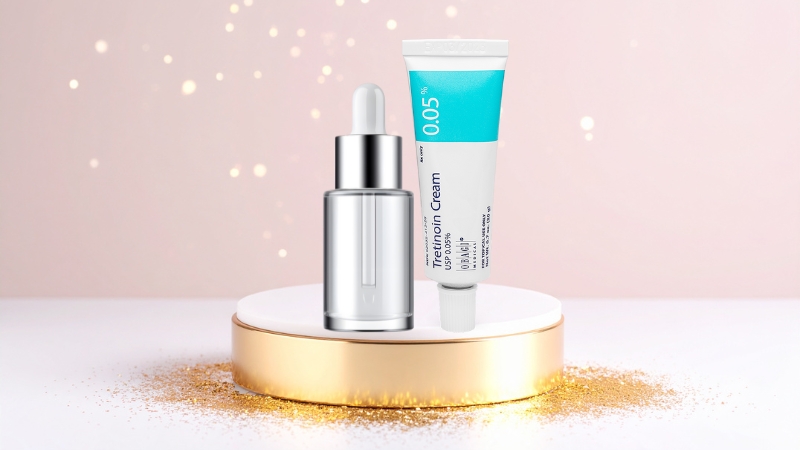
Yes, you can use niacinamide with tretinoin in the same skincare routine, and when done correctly, the combination is not only safe but often beneficial.
Niacinamide helps reduce irritation, support the skin barrier, and improve tolerance to tretinoin, while tretinoin remains one of the most effective topical treatments for acne, photoaging, and hyperpigmentation.
The key variables are formulation strength, routine order, skin condition, and timing.
Why Niacinamide and Tretinoin Are Often Used Together
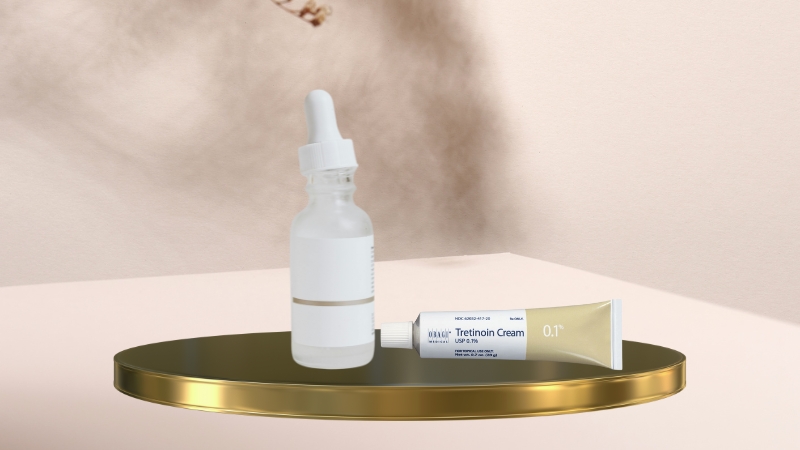
Tretinoin, a prescription retinoid derived from vitamin A, works by increasing cell turnover, normalizing follicular keratinization, and stimulating collagen production. Clinical use of tretinoin dates back to the late 1960s, with FDA approval for acne vulgaris in 1971.
Its efficacy is well documented, but so are its side effects. Irritation rates in early studies ranged from 30 to 70 percent during the first 8 to 12 weeks, especially dryness, erythema, peeling, and burning sensations.
Niacinamide, also known as nicotinamide or vitamin B3, has been extensively studied since the early 2000s for its anti-inflammatory, barrier-repair, and sebum-regulating properties.
Unlike niacin, it does not cause flushing. Multiple controlled trials have shown that topical niacinamide increases ceramide synthesis, improves transepidermal water loss, and reduces inflammatory lesions in acne-prone skin.
The reason these two ingredients are paired is functional rather than trendy. Niacinamide addresses many of the tolerability issues that cause people to discontinue tretinoin prematurely.
Core Functions of Each Ingredient
Ingredient
Primary Function
Secondary Benefits
Common Side Effects
Tretinoin
Increases cell turnover, treats acne, stimulates collagen
Improves hyperpigmentation, smooths texture
Irritation, peeling, dryness
Niacinamide
Supports skin barrier, reduces inflammation
Regulates oil, improves tone, reduces redness
Rare irritation at high concentrations
Does Niacinamide Inactivate Tretinoin

One persistent concern is whether niacinamide interferes with tretinoin activity. This confusion often stems from older data about niacin converting to nicotinic acid at very low pH levels.
Modern cosmetic niacinamide formulations are stable across a wide pH range, typically between 5.0 and 7.0. Tretinoin formulations, depending on the vehicle, usually sit around pH 5.5 to 6.5.
There is no clinical evidence showing that niacinamide deactivates tretinoin when layered correctly. Dermatology literature and formulation chemistry both support compatibility.
Many prescription combination products and dermatologist-recommended routines already include barrier-supporting agents alongside retinoids for this reason.
Correct Routine Order: Niacinamide and Tretinoin
The order in which niacinamide and tretinoin are applied matters for both efficacy and comfort. The decision is not universal and depends on skin sensitivity, tretinoin strength, and formulation type.
Standard Evening Routine Order
Step
Product Type
Purpose
1
Gentle cleanser
Removes debris without disrupting the barrier
2
Niacinamide serum or lotion
Prepares skin, reduces irritation risk
3
Tretinoin
Active treatment
4
Moisturizer
Locks in hydration and buffers irritation
Applying niacinamide before tretinoin can act as a buffer, reducing the penetration rate of tretinoin slightly without eliminating its effectiveness. This is particularly useful during the first 8 weeks, when retinization occurs.
Some dermatologists prefer applying tretinoin first on completely dry skin, followed by niacinamide and moisturizer. This approach may increase tretinoin potency but also increases irritation risk.
Order Comparison by Skin Type
Skin Type
Preferred Order
Rationale
Sensitive or new to tretinoin
Niacinamide before tretinoin
Reduces burning, peeling, and redness
Acne-prone, tolerant skin
Tretinoin first, niacinamide after
Maximizes retinoid efficacy
Dry or barrier-impaired skin
Niacinamide before and moisturizer after
Supports lipid repair
Managing Irritation When Using Both
Irritation is not a sign that tretinoin is working better. It is a side effect of barrier disruption and inflammation. Studies show that excessive irritation increases dropout rates and decreases long-term adherence, which directly reduces clinical outcomes.
Niacinamide helps mitigate this by increasing ceramide synthesis and reducing inflammatory cytokines such as IL-1 and IL-6 in keratinocytes. In a 2005 study published in the British Journal of Dermatology, 5 percent niacinamide significantly improved barrier function within four weeks.
Practical Irritation Control Strategies
Variable
Adjustment
Impact
Tretinoin frequency
Start 2 to 3 times weekly
Reduces acute irritation
Niacinamide concentration
2 to 5 percent
Minimizes stinging risk
Application timing
Wait 20 to 30 minutes after cleansing before tretinoin
Reduces penetration shock
Moisturizer use
Apply liberally after tretinoin
Restores lipid balance
Using niacinamide does not eliminate the need for proper moisturization. Barrier lipids such as cholesterol and fatty acids remain critical, especially during early tretinoin use.
Can You Use Them in the Same Product

Some formulations combine niacinamide and retinoids, though tretinoin itself is rarely included in over-the-counter blends due to prescription status in many countries.
However, compounded prescriptions sometimes include niacinamide alongside tretinoin for patients with rosacea-prone or sensitive skin.
Formulation matters more than ingredient lists. Encapsulated tretinoin systems and lotion-based vehicles tend to be better tolerated and more compatible with supportive ingredients like niacinamide.
Best Supporting Ingredients to Pair With Both
Niacinamide and tretinoin work best within a broader supportive routine rather than in isolation. Certain ingredients consistently improve outcomes when used alongside both.
Ingredients That Pair Well With Niacinamide and Tretinoin
Ingredient
Benefit
Notes
Ceramides
Restore barrier lipids
Especially useful during the first 12 weeks
Glycerin
Improves hydration
Non-irritating, widely compatible
Hyaluronic acid
Reduces tightness
Best applied on damp skin
Panthenol
Anti-inflammatory
Supports wound healing
Conversely, exfoliating acids such as glycolic acid, salicylic acid, and lactic acid increase irritation risk when used frequently alongside tretinoin. If used at all, they should be separated by days rather than layered in the same routine.
Morning Routine Considerations
View this post on Instagram
Niacinamide is well-suited for morning use, while tretinoin should be applied only at night due to photoinstability. Niacinamide improves tolerance to daily sunscreen use and may reduce redness caused by UV exposure.
Example AM vs PM Routine Structure
Time
Key Ingredients
Purpose
Morning
Niacinamide, moisturizer, sunscreen
Barrier support and protection
Evening
Niacinamide, tretinoin, moisturizer
Treatment and repair
Consistent sunscreen use is non-negotiable when using tretinoin. UV exposure undermines tretinoin’s benefits and increases irritation and pigmentation risk.
Long-Term Outcomes of Using Both Together
@tamsskyn Niacinamide is a great active to layer with tretinoin retinol- itll really level up your skin #skincare #retinolskincare #tretinoin #niacinamide #simpleskincare #skincaretips #skincare101 ♬ original sound – Tammy Weatherhead
Long-term studies consistently show that adherence determines results more than ingredient intensity. Patients who tolerate tretinoin and remain consistent for six to twelve months see measurable improvements in acne lesion counts, fine wrinkles, and hyperpigmentation.
Niacinamide contributes indirectly by improving comfort, reducing inflammation, and maintaining the skin barrier. In practice, this often determines whether tretinoin is used long enough to deliver its documented benefits.
Final Clarification
Niacinamide and tretinoin are compatible, evidence-supported partners in a well-structured skincare routine.
When layered correctly and supported with appropriate moisturization and sun protection, niacinamide improves tolerance without compromising tretinoin efficacy.
The combination is not experimental or controversial. It reflects current dermatologic practice focused on balancing results with long-term skin health.